

In the process of outdoor hiking, it is normal for socks to be wet. No matter what hiking shoes you wear, under different environmental scenarios such as walking in rainy days, clear skies and hot days, and passing through dewy grassy areas, different physical fitness, different equipment can cause different degrees of dampness in socks. What should I do if the socks are wet?
(Note that the following methods are all for sweat-wicking and breathable synthetic fiber hiking socks or wool socks.)
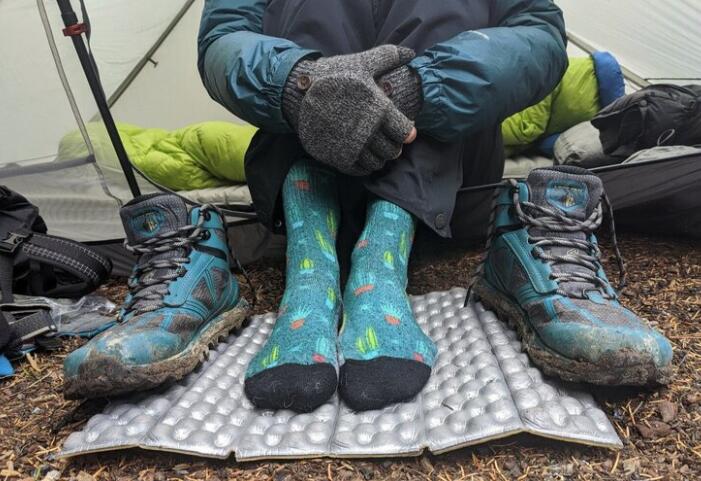
Slightly Wetness: The front end of the socks is slightly damp due to sweat, and it feels wet and cold when resting. At this time, the outer layer of the shoe is usually dry, and the inner layer is also slightly damp at the front end, which usually occurs when the weather is good, walking very fast, and the feet are sweaty. The treatment method is to change into a pair of dry socks after arriving at the camp or destination, and then put the slightly damp socks in the pocket of the down jacket, and it will be almost dry before going to bed.
Moderate Wetness: It is obvious that the socks are damp when wearing them, which is mostly caused when the outer layer of the shoes is already wet in light rain, and the evaporation of sweat in the shoes is not effective. In this case, the wet socks can be put on the kettle with hot water first, and the water in the socks will be quickly evaporated by the hot water. At this time, it will be obvious that a lot of water vapor will emerge from the wet socks. Wait until the temperature of the hot water in the kettle drops. After that, you can add hot water and repeat the operation until the socks are visibly dry. Put it in your sleeping bag when you go to bed, and you’ll have dry socks to use the next morning.
Severe Wetness: Various conditions cause the socks to be severely damp, and the shoes will also be damp to a certain extent. Assess how wet your shoes are and check for leaks. If you cannot deal with the factors of shoe water leakage (such as failure, damage), you can only repeatedly wring out the socks and do not need to dry them, because the wet shoes will still wet the socks, unless you walk vertically for more than six or seven days, and every day is sunny, then completely wet hiking shoes may have a chance to dry. For a short-day trip, you can only endure until you go down the mountain. Of course, you should put on dry socks when you go to bed at night at the camp, and put on wet socks when you travel the next day.