

It's Not Just About Warmth; These Scientific Principles Will Open Your Eyes
Wool socks are undergoing a technological revolution. From professional mountaineers to urban professionals, more and more people are finding that traditional cotton socks are being quietly replaced by wool socks. Behind this shift lies a breakthrough in materials science and a redefinition of the wearing experience.
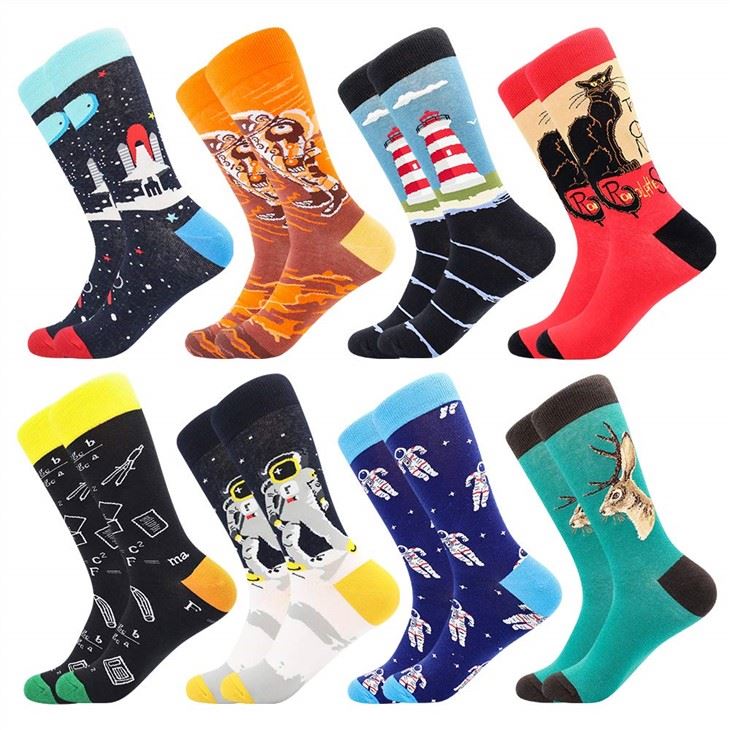
A Master of Temperature Regulation in Nature
The unique structure of wool fibers acts like a miniature climate control system: each fiber's surface is covered with natural scales, forming countless tiny air chambers. This structure gives wool superior insulation properties-even in humid environments, wool retains 80% of its insulation, while cotton materials experience a more than 50% drop in insulation under the same conditions.
High-performance Merino wool is particularly outstanding, with fiber diameters less than 19.5 micrometers, offering a silky soft touch while maintaining powerful functionality. In recent years, top outdoor brands have launched ultra-fine Merino series, elevating the comfort and functionality of wool socks to new heights.
Intelligent Humidity Management Solutions
Wool's moisture-wicking ability is astonishing:
It can absorb up to 30% of its own weight in water without feeling damp.
The hydrophobic layer on the fiber surface and the hydrophilic inner layer work together to achieve rapid moisture transfer.
Natural antibacterial properties reduce odor, making it suitable for multi-day outdoor activities.
Professional testing data shows that during an 8-hour hike, the relative humidity inside wool socks is 40% lower than that of synthetic fiber socks, directly reducing the incidence of blisters and foot discomfort.
Scientific Innovation in Zonal Design
Modern wool socks have moved beyond the "one-piece" design concept, opting for precise functional zoning:
Foot Reinforcement Zone: Utilizes dense weaving technology and abrasion-resistant fiber blends to provide extra protection at key pressure points. Some high-end models incorporate carbon fiber reinforced yarns, significantly improving durability.
Ankle Support Zone: Achieves a balance between support and flexibility through precise ratios of elastic fibers and a three-dimensional weave structure, reducing fatigue during long walks.
Breathable Adjustment Zone: Areas prone to sweating, such as the instep, utilize openwork or ultra-thin knitting techniques, combined with wool's natural temperature-regulating properties, to create an intelligent ventilation system.
Dual Advantages in Environmental Performance: The sustainable development advantages of wool socks are increasingly evident:
Biodegradable properties align with the circular economy concept.
The carbon footprint during production is 60% lower than that of synthetic fibers.
High-quality wool socks have a lifespan 3-5 times longer than ordinary cotton socks.
Data from international environmental organizations shows that choosing a pair of high-quality wool socks instead of fast-fashion socks is equivalent to reducing carbon dioxide emissions by approximately 2.5 kg.
Buying Guide: How to Identify Genuine High-Performance Wool Socks
Check the Ingredient Label
High-quality products clearly indicate the type of wool (e.g., merino, cashmere) and its specific content, with a scientifically reasonable blend ratio.
Check Certification Marks
Look for authoritative certifications such as Woolmark and GOTS Organic.
Test the Zoning Design
High-quality wool socks should have clear functional zones, with noticeable differences in thickness and elasticity in different areas.
Inquire about the Manufacturing Process
Pay attention to details such as seamless toe technology and environmentally friendly dyeing processes.
Industry Outlook: The Integration and Innovation of Smart Fibers
The future development trends of wool socks are beginning to emerge:
The integration of phase change materials enables more precise temperature control.
The addition of conductive fibers expands health monitoring functions.
The application of nanotechnology enhances the performance limits of natural fibers.
Technology Insights Provided by: Xinrun Socks Manufacturing R&D Center
Since its establishment in 1980, Xinrun Socks has continuously focused on the field of functional socks. Our R&D team has focused on the following in recent years:
Optimizing and innovating wool blend formulas, resulting in multiple technology patents.
Improving the precision of zoned knitting technology to achieve millimeter-level functional differentiation.
Comprehensively upgrading environmentally friendly production processes to reduce resource consumption while ensuring stable quality.
We offer our partners:
✅ Small-batch customized development (minimum order of 500 pairs)
✅ Professional-grade wool raw material supply channels
✅ Functional testing and verification support
✅ Sustainable production solutions
Whether it's a technological upgrade for outdoor brands or a differentiated entry point for emerging brands, we can provide comprehensive technical support. Contact us for professional advice on wool sock product development.